
Swiss Army Node
One radio box that keeps people talking when the internet and the cell towers are down. It runs on the sun, fits in a field case, and speaks three different mesh networks. It is a Blackout Labs device.
In development · parts on the bench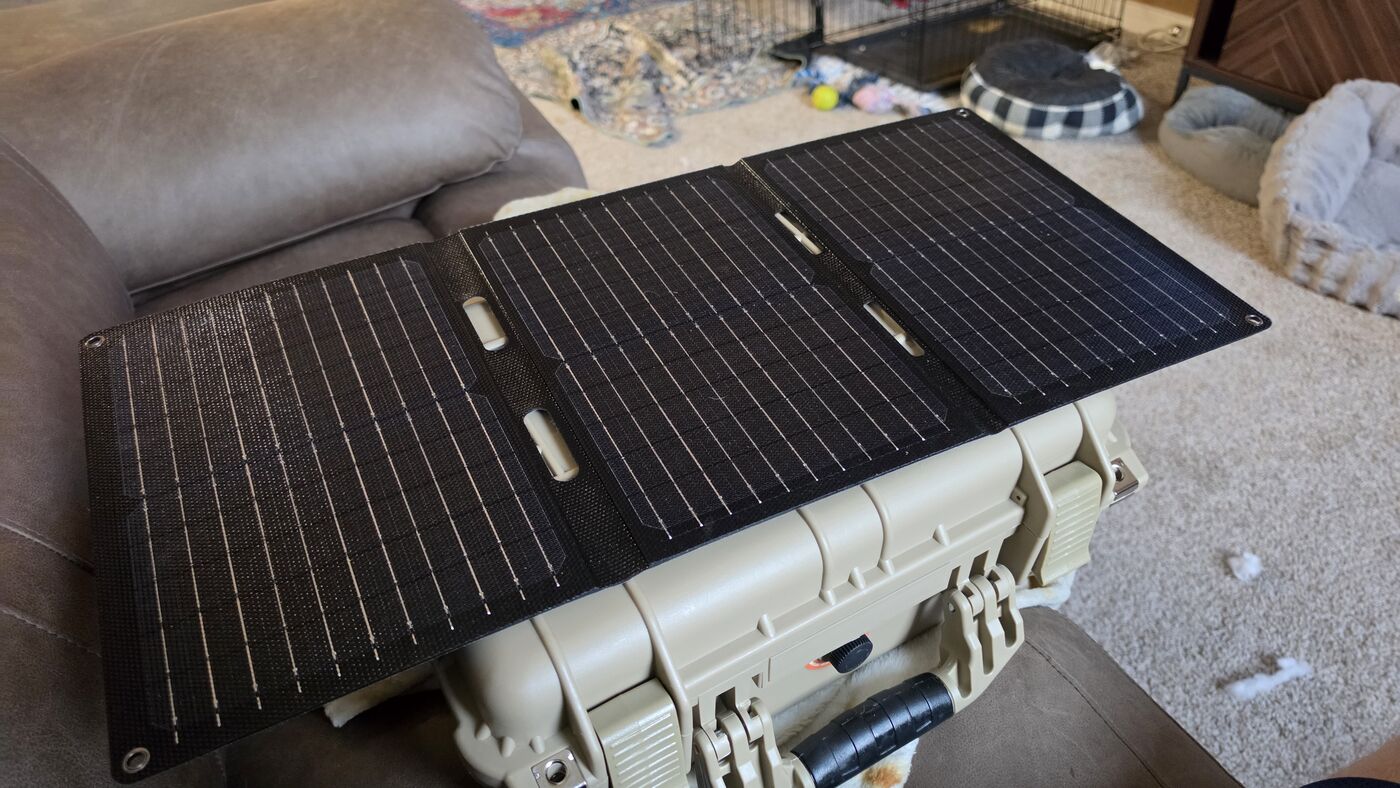
What it does
When the power or the network goes down, phones go quiet. This box does not. It talks to other radios miles away over LoRa, a long-range, low-power radio signal. No cell service, no internet, and no monthly bill.
One radio, three networks. The main radio runs Reticulum, an encrypted network that can also carry messages over the internet when the internet is there. Flash it again and it joins Meshtastic or MeshCore, the two big community mesh networks, instead.
A brain of its own. A small ESP32-P4 computer runs the network on its own, so the node keeps routing messages with no laptop plugged in.
The network in your pocket. A LilyGO T-Deck, a pocket radio with a keyboard and a screen, and a Heltec T114 node carry the same network in your hand.
Power that does not need an outlet. A 30-watt folding solar panel, a charge controller and a sealed 12-volt battery keep it running day and night.
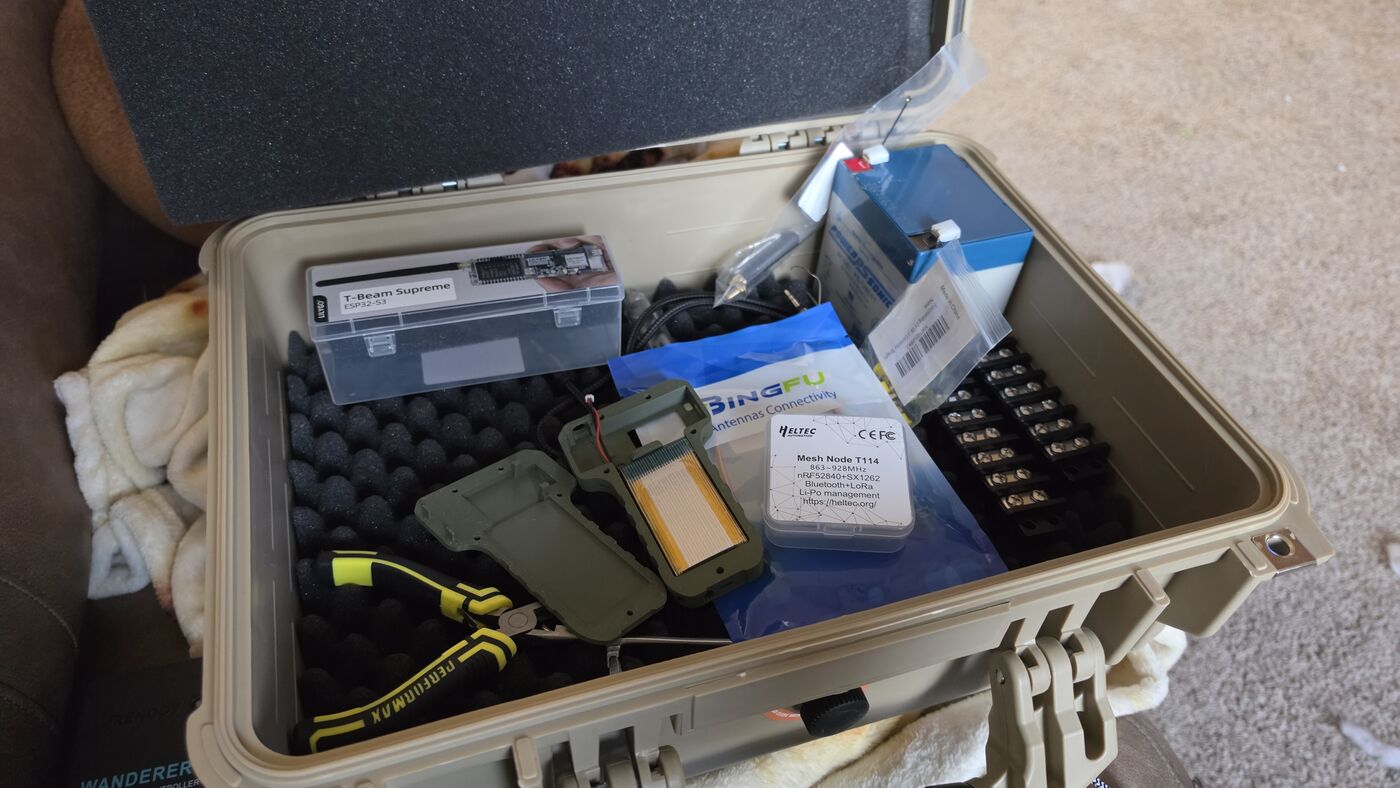
Everything in one case
The parts laid out in the field case: the radios, the battery, the antennas and the wiring. This is the whole node before it goes together.
Part of Blackout Labs
Blackout Labs is the off-grid side of what I build: radios, solar nodes, repeaters, portable kits and the apps that run on them. All of it is built to keep people talking with no infrastructure, no subscription and no cell coverage. The Swiss Army Node is the flagship, the one box that does all of it.
Where it stands
The parts are bought and on the bench, and the build plan is written. Next, the main radio gets flashed for Reticulum, the solar charging gets wired into the case, and the handhelds get their boot screens. I will put the field test here when it is done.